Be it for the excellent work in the educational and health care institutions, in science, industry and economy or in politics. Art and culture would be useless and boring without the contributions of women, not to forget to mention their achievements in the field of sports.
Since the proposal of Clara Zetkin in 1910 to introduce an International Women’s’ Day, there are many issues which can be quoted as big achievements during the struggle for equal rights and recognition of women.
Despite gender mainstream and antidiscrimination laws, we are still very far from actual equal rights and equal opportunities. The United Nations celebrate the International Women’s’ Day 2010 worldwide under the slogan “Equal rights – Equal Opportunities – Progress for All!” and commemorate the declaration and action platform of the Fourth World Conference on Women in Beijing 15 years ago.
Regardless of improvements reached, especially in the sector of education, we observe a high rate of maternal death and we have to hear that 70% of women have been the object of violence during their life time. In 2008, only 52,6% of women have been employed in contrast to 77,5% of men and far too few women occupied higher executive positions. At peace negotiations, peace keeping and disarmament processes women were sometimes not at all involved or strongly underrepresented.
Furthermore the European Union declared year for combating poverty and social exclusion reminds us of the fact that the employment rate of women in the most productive economic region of the world is 12% lower than the employment rate of men and so women are exposed to a higher risk of poverty.
The press release on the 8th of March by the statistical office of the European Commission (EUROSTAT) stating that “For the first time, unemployment rate for women lower than for men in the EU27” is malignant – only due to the fact that during the crisis by far more men lost their job compared to women.
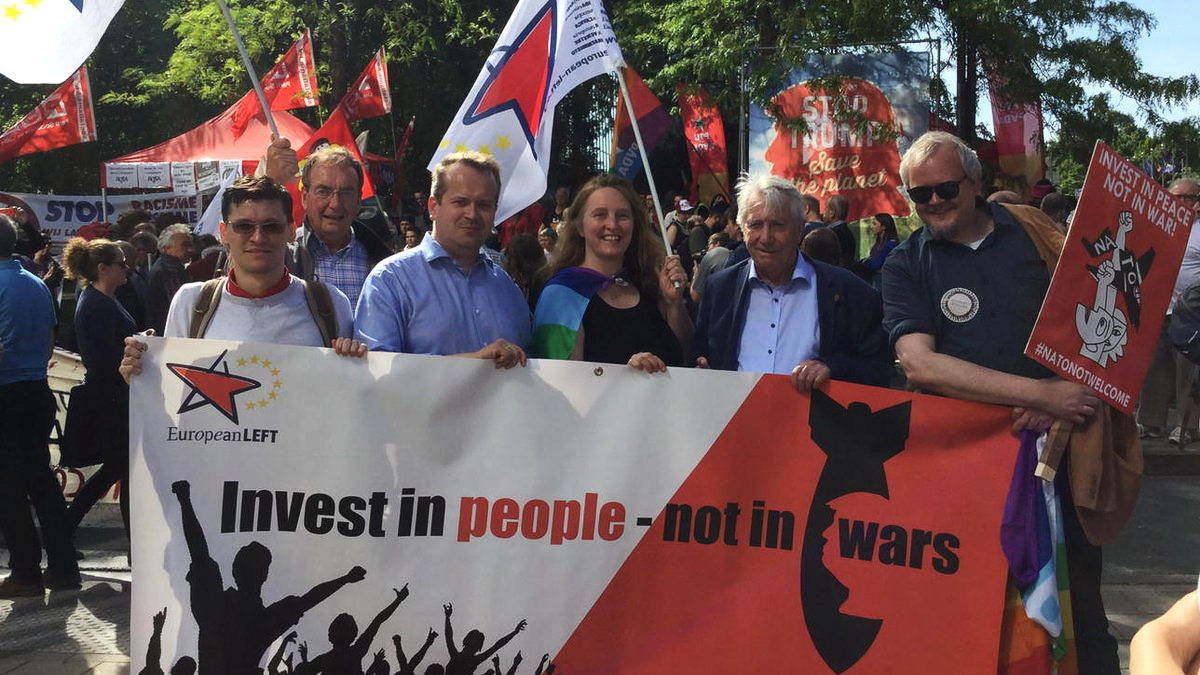
Given these facts, we as members of the European Left reconfirm our attitude that the struggle for gender justice is intrinsically tied to social justice. We struggle for the implementation of policies, which are guaranteeing equal rights to all people of society and empower people to live their lives in dignity through well paid jobs and employment with decent social security, with equal educational opportunities, ability to take part in cultural live and mobility. At the same time gender justice is a value in itself trespassing the social question and extending equally to culture, power and status.
That is what we also try to implement in our own parties. We are proud that we have female ministers in regional governments, majors, head of groups and also women in office which are more and more actively taking part in European, national, regional and local politics.
Every day of the year should be 8th of March. To achieve this, society needs the strength and the courage for more equal opportunities.
Original Language / EN