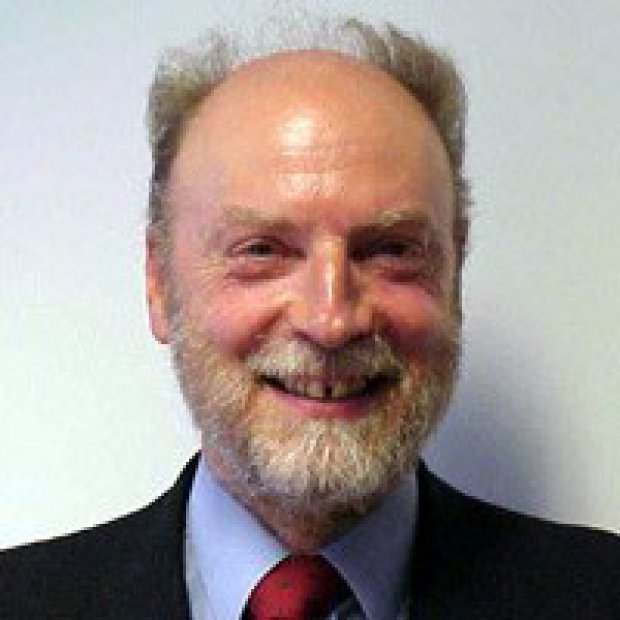
Francis Wurtz, Chairman of the Group United European Left/Nordic Green Left (GUE/NGL), in the European Parliament in the EP Plenary Session on 1 December, 2004
Mister President,
The events unfolding in Kiev during the last ten days or so are good news for democracy. Overcoming fatalism and fear, hundreds of thousands of Ukrainian citizens are demonstrating, with a calm determination, their demand for change. They have gradually imposed a certain respect for their movement amongst a large section of the Ukrainian Parliament, the army, the media and apparently the Supreme Court itself.
This shake-up is due to the fact that the Koutchma system has, over the years, led to the growth of an ever-broader opposition in which can now be found tendencies with very different ideas regarding the future of their country. The regime´s drift into authoritarianism was, in fact, already set in motion during the period in which the Prime Minister was called Iouchtchenko rather than Yanoukovitch. Yet despite this, for a long time the leaders of Europe, and more generally of the west, have treated the Ukrainian president as an ally. For his part, Président Bush, just last year, apparently demonstrated his confidence in the existing power's willingness to defend, at his side, democracy in the Middle East, saluting Mr Koutchma's decision to send troops to Iraq. All of these elements should lead us to take a somewhat measured view of certain professions of the democratic faith, at the same time avoiding simplistic and Manichean visions of Ukrainian political realities.
The big challenge at the present time appears to me to be the need somehow to succeed in ensuring that what is in itself good news for democracy is not transformed into a tragedy for the Ukrainian people, provoking if not the partition of the country, at least the awakening of nationalisms and the resurgence of ethnic divides going back to the time of the Russian and Austro-Hungarian Empires.
I find it, in this respect, somewhat archaic, one might indeed say irresponsible, to present the Ukrainian crisis as a sort of arm-wrestling match between "the West" and Russia, a European variant of the struggle of good against evil. The history of the Ukraine being as it is, such an approach can only exacerbate the division between the country's two principle parties. This would do nothing to address the interests of the Ukrainian people, least of all those of the western region, extremely dependent as they have become on the rest of the country since the collapse of cross-border trade with the entry of their neighbours into the European Union. Neither would it be in the interests of the EU itself.
As much as we are justified in encouraging, by our mediation, a democratic dynamic in the Ukraine, we have a great deal to lose through the destabilisation of this economically and politically fragile region. Let´s leave to Paul Wolfowitz the imperial vision of Europe expressed in his declaration that "The objective of a Europe entire and free will not be attained unless the Ukraine becomes a full member of the European Union and until she is fully integrated into NATO."
It would be best, for our part, if we were to refrain from exerting this kind of pressure. As soon as new elections, hopefully conducted in full transparency, have determined the legitimate representative of the country, the moment will arrive when we must engage both the authorities and the broader society itself in a calm political dialogue, one which does not put the new relationship with the Union in opposition to the country's special relationship with Russia, but which, on the contrary, sets out to open a perspective which the Ukrainian people, in all their diversity, can feel is right for them. Here, once more, is a serious test of our ability to put in place a common foreign policy worthy of the name.
Original Language / EN