The Heads of State of 196 countries will be meeting in Paris for the 21st United Nations Climate Change Conference of the Parties (COP21), to be held from 30 November to 11 December 2015. The States claim they are ready to take action in order to curb the catastrophic effects of climate change. Their task is anything but easy – to achieve a global and binding agreement on climate change in order to reduce the capitalist system’s impact.
One of the main challenges of COP21 is to limit global warming to below 2°C in 2010, which requires commitments to reduce the greenhouse gas (GHG) effect for the 2020-2030 decade. Another challenge is ensuring the right to food safety and to energy, education, health and employment of a growing world population. Lastly, the rich and industrialised countries must deliver on the promise made at COP15 in Copenhagen in 2009 to provide the Green Climate Fund with 100 billion dollars per year by 2020. This would enable the developing countries to create the measures to adapt to the consequences of global warming. This should be the goal of the next G20 summit.
We believe that saving natural resources will lead to better standards of living conditions for the planet’s inhabitants. It is inevitable that we shift from a fossil fuel-based society to a “low carbon” civilisation. This shift calls for a profound political change that will touch upon all aspects of our personal lives, such as transportation, housing, industry, agriculture, energy, the economy and employment. This type of project will only be feasible once we place an active and informed citizen engagement at the very heart of the process.
The fight against climate change and the fight against globalised neoliberal economic development are closely linked. It’s clear that the need for an ecological transition and the current means of production and consumption are now incompatible with the policies advocated by the doctrine of globalised financial capitalism.
A transition towards such a society should be one of solidarity. In Paris – after COP21 – we hope that the logic of sustainable development and human emancipation will finally prevail over the socially blind logic of the immediate profit.
Our choice is clear: to place the interests of the planet and its peoples as a top priority. We prefer to measure the level of welfare based on the UN Human Development Index rather than the CAC40 stock index, defined by multinational corporations and the financial markets.
Any institutional system discussed at COP21 must include measures to reassure a fair balance of power between developed and developing countries. Agricultural speculations and the dynamics of globalized trade, which are promoted by the WTO, are deepening the imbalance of resources and power. We must regulate international markets, further the development of public infrastructure and promote the principles of differentiated efforts and transparency to correct the current imbalance of power and means between countries.
We support R&D and inter-state cooperation so that the transfer of know-how and technology to a developing country may be possible, as well as the compensation mechanism required by the most vulnerable countries. We need to agree on a legal status for climate refugees as of now.
Europe has a key position at the COP21 negotiations, but the European Union cannot make environmental commitments that are ambitious enough to ensure the necessary changes in climate policies while it is driven by austerity policies. We must stop austerity and promote the creation of a Social and Ecological European Development Fund.
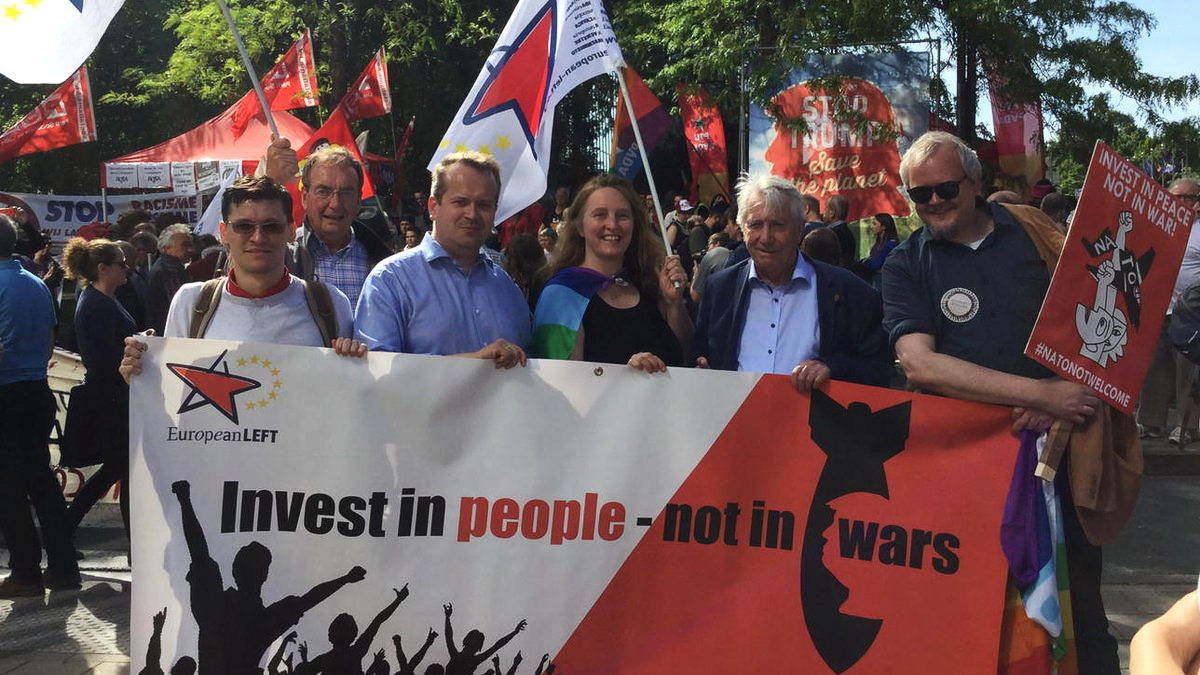
As citizens, we are part of all these fights and act together with all the civil society stakeholders in Europe and the world (Climate Express, Alliance 21 or Alternatiba...). Demonstrations will be organised in most of the planet’s capitals on 28 and 29 November. These will mobilise civil society from all over the world and other citizens’ initiatives will follow[1].
We call for the development of all useful mobilisations so that the Heads of State will reach a high-level agreement after COP21.
On November 29th we will be in Paris for the Great March for Climate Action.
[1] The Citizen Summit for Climate (Held on 5 and 6 December in Montreuil). The Action Zone for Climate, another place for awareness-raising and debate, will run in Paris from 7 to 11 December. On 12 December, civil society throughout the world will be mobilised to assess the outcomes of COP21 and unblock mobilisation patterns for the long term.