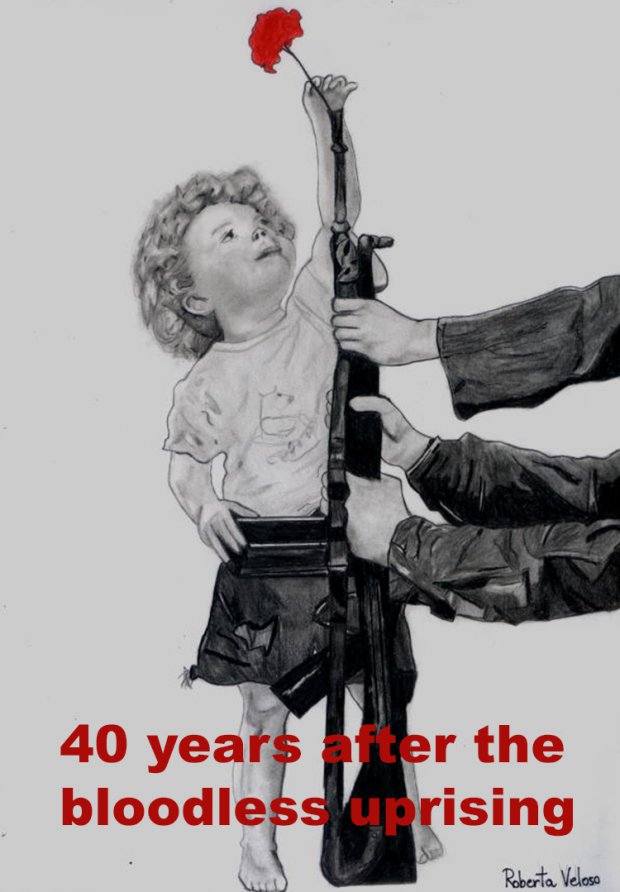
In April 1974 a coup carried out by left-leaning army officers led the way to democracy in Portugal. The coup on April 25, was led by soldiers in tanks and joined by a popular resistance movement. Nowadays austerity measures are threatening the welfare state, healthcare, education, pensions, labour and all the social achievements accomplished 40 years ago.
«The Carnation Revolution forty years after the April 25, 1974, stands as an inspirer of our struggles for democracy and freedom against government austerity and dictatorship of the markets which require the bankers and the troika» said the MP and coordinator of the Bloco de Esquerda (Left Bloc) Catarina Martins at her interview to the official newspaper of SYRIZA «Η Αυγή» (Avgi), emphasizing on the presence of Alexis Tsipras at the start of the electoral campaign of the Left Bloc in Porto on April 26.
Carnation Revolution toppled a dictatorship that began in 1926 with a military coup, continued under Salazar from 1932 to 1968 and ended with the overthrow of his No 2, former Portuguese Prime Minister Marcelo Caetano, in the Carnation Revolution.
The bloodless uprising against the Estado Novo was named after the red spring flowers that were placed in the muzzles of the soldiers’ rifles. Portugal flourished after the revolution, joining the EU in 1986, but its massive debt caught up with it.
In 2011, Portugal had to be bailed out by international creditors, who obliged it to make tough spending cuts and other austerity measures.
In the southern town of Evora, magistrate Aurora Rodrigues, 62, still has nightmares about being tortured by the secret police for protesting against the regime.
The «Whitewash» of the old regime
At the age of 21, she was deprived of sleep for two weeks straight and cannot put her head under water to this day, as it brings back memories of the simulated drownings she suffered in 1973.
“No pacification is possible until the torturers are brought to account,” she told reporters. Rodrigues kept silent about her torture for 36 years until a psychiatrist treating her for recurring nightmares persuaded her to write a book about it.
“The mood after the revolution discouraged political prisoners from speaking out,” resulting in a “whitewash” of the crimes by Salazar’s ideological enforcers, the International and State Defense Police (PIDE), she said. Historian Irene Pimentel estimates that the PIDE killed nearly 50 political dissidents in Portugal, not including victims who died in the country’s colonies.
taken from: http://alexistsipras.eu/index.php/news/132-people-of-portugal-will-prevail-again-and-change-europe