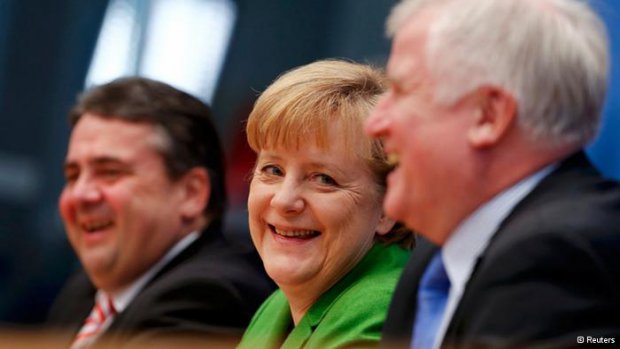
The longest coalition negotiations in the history of the Federal Republic, unsurprisingly, resulted in an agreement dominated by Angela Merkel's line. The content of the agreement will increase social inequalities in Germany. The CDU, CSU and SPD agreement is settled down in the logic of "competitiveness" in the service of business and financial markets, and which has already produced a lot of damages, especially since the adoption of Agenda 2010 : partial work, "mini jobs" without social protection, or small jobs paid 1 euro per hour. Today, nearly one in five German workers is "poor". The proposed minimum wage, initially proposed by Die Linke and long overdue in the country, has been distorted: it will be applied in 2017 and the remuneration will be low. At European level, the right and the Social Democrats have agreed not to make any change in the brutal policies imposed by Angela Merkel since the beginning of the crisis. The agreement stipulates: "The high level of debt must be reduced in Europe (...) The policy of fiscal consolidation should be continued and combined with structural reforms for sustainable growth and future investments.” While a report from an expert of the European Commission has demonstrated that the austerity policies have reduced the level of wealth produced throughout Europe - Germany's GDP was reduced by almost 4 percentage points - and while the MEPs question the authoritarianism and the opacity of the troika, this choice is anachronistic and dangerous. We must abandon austerity in Europe, boost the economies of European countries and give priority to social and sustainable development. European elections in May 2014 will be an opportunity for EU citizens to reject the path taken by Merkel and her allies by voting for lists of the Left who do not give up social progress.